Featured

Audience Preferences

Looking at the Box Office Mojo website, 19 out of the 20 top lifetime grossing films are part of franchises with the only exception being the famous ‘Titanic‘ (1997, James Cameron) recently beaten by the worldwide phenomenon ‘Avengers: Endgame‘ (2019, Russo’s Brothers). To look at more recent results, 17 out of the first 20 highest grossing films in 2019 are part of franchises, the three others being Asian films. 

In order to understand why this seems to happen I have conducted a survey about audience taste for franchises: https://survey.zohopublic.eu/zs/oVB885.

When asking the moviegoers about their favorite film, only 18% of them answered with franchises. However, when they were asked about what film seen during their childhood retained their nostalgia, 59% were part of a franchises.

We then proposed two upcoming films: ‘Star Wars: Rise of Skywalker’ (2019, J.J Abrams) and the upcoming ‘Matrix‘, and this time they were asked why would they be or not be looking forward to see them. For both the majority said they were exited about seeing these films either because “God damnit, it’s a mother fucking stars wars movie! Even if it’s Disney…” or”I like Keanu but the matrix is a classic, flaws and all“. 

These results tend to show that while understanding that the production quality of one-offs make them better films, the audience will be marked more by franchises that grew up with them and became ‘classics’ in their mind. 

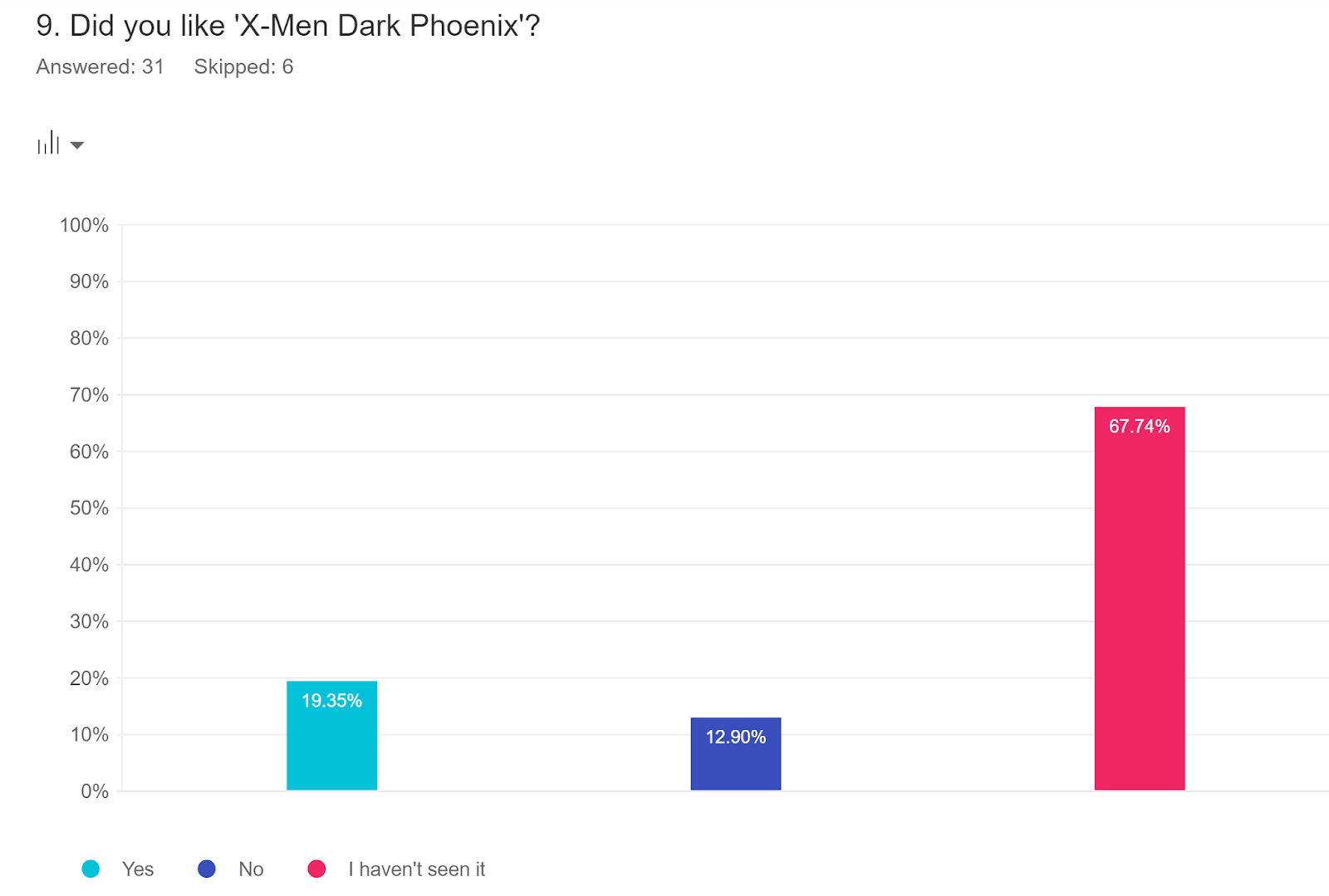
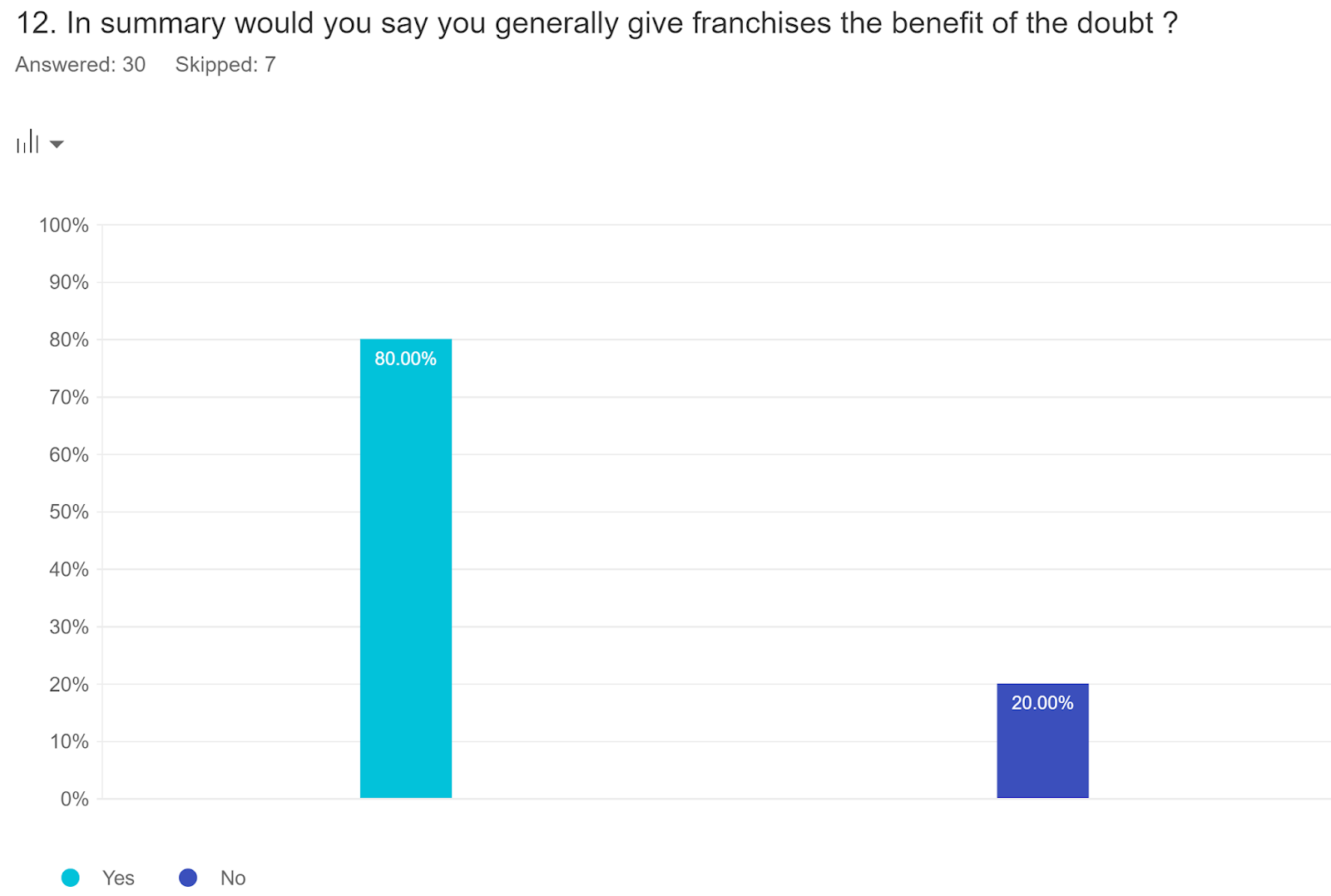
However, we also suggested two sequels that recently came out in theaters, ‘Men in Black: International’ (2019, F. Gary Gray) and ‘The Dark Phoenix‘ (2019, Simon Kinberg), and asked if they would be interested in seeing another sequel. The results came as a surprise with a majority saying they didn’t even see the films but that they would gladly watch another one. Both these films were largely badly criticized with Rottentomatoes scores of 23% for both Men in Blackand Dark Phoenix. To understand these facts we asked another question: “Would you say you generally give the benefit of the doubt to franchises?”. 80% of the readers answered they indeed would.

This survey seems generally to indicate that when a new film that is part of a franchise comes out, the fans pushed by nostalgia will be exited to see it. If it ends up having bad reviews, they just won’t go see that one and wait for the next. Franchises work on this fan trust that a franchise will always come up with a better sequel, and that is how franchises live forever. 


However, how long is that going to last if they keep disappointing fans with each new bad sequel?

Euphoria is trauma-porn

One of my friends told me something that made me want to write this article and I think it opens the argument quite well: « It’s self-wanking and we are supposed to take it and call it art because of eye shadow and nails. »

So, it took me a while to watch HBO Euphoria, and I eventually did because my sister put it on her iPad for our flight to Sri-Lanka. Which is odd because I was such a huge fan of Sam Lenvinson’s teen thriller “Assassination Nation”. And I knew from all the online press the show was getting that Euphoria had the same sort of signature style: glittery eyeshadow, powerful women, toxic masculinity, social media abuse, and an overall sense of unbridled American teenagerhood. Plus, I had a little guilty crush on Jacob Elorbi after watching the Kissing Booth (sue me). So why didn’t I immediately tune in when the show first came out?

Well. When you put aside the cinematography – which is undoubtedly one of the most beautiful thing that has blessed our screens – the show felt random. The synopsis on IMdB goes: “A look at life for a group of high school students as they grapple with issues of drugs, sex, and violence.” Which felt like it could the storyline of any other episode of Gossip Girl who at least made the effort to add some semblance of a mystery plot to the mix. But when Chuck Bass’ rape scene in season 1 came out, everyone drewthe line and dismissed his storylines from the rape onward feeling that the character’s violence would make it unjustifiable to keep watching the show (and I agree). Meanwhile a decade later, the same viewers were tuning in and praising Euphoria, a show defining its storyline as: “teenagers grappling with sex, drugs, and violence” and nothing else.

To me that felt like trauma porn. “Trauma porn is any art or medium that exploits the trauma of another person most often for the act of getting a rise out of the viewer.” Which was probably the reason I hadn’t watched the show, becauseIt felt weird to me to go home after work, eat dinner and put on my TV to relax to teenagers being raped or ODing in their highschool bathroom. And nothing else. Ultimately what bothered me was that people were being entertained by a show only performing these issues of sexual, physical, and emotional violence. Hear me out, I am not against these topics being portrayed on mainstream TV (I love Skins, Skam, Misfits, The Society, Merli etc.). My issue arises when violence becomes the plot driving force and not a way to safely discuss these topics

But then, how could I have an informed opinion on the show before actually watching it?

After binging both seasons of Euphoria, I realized Sam Levinson to be something of a genius. Every episode was more compelling than the next, I couldn’t tear my eyes from the screen and even ended up glued to my phone in the shower or on my walks to work. I couldn’t look away. But my opinion on the show didn’t change : it is a badly written TV series. Each scene has high entertainment value, each episode great teasing for the next – but so does any decent reality TV Show. In all honesty, the characters of Euphoria felt like they had as much character development and storyline resolution than the people on “Big Brother”.

The topic of sexual orientation being influenced by external factors and expressed later on during puberty is raised in the first half of season one through the character of Nate. The 8- year-old discovers his dad’s sex-tapes, and Nate is later shown distraught by his compulsion to keep pictures of penises on his phone despite having a girlfriend. From then on, the awareness of his father’s secret repeatedly prompts violent fits of rage. Which would be acceptable if it were to work toward a resolution serving the discussion of the issue raised – like to discuss the impact of exposition to sexual videos at a young age on adolescent psyche. Instead, it becomes clear early on that this anger is merely used for entertainment and to create interesting climatic scenes – such as the one of the fair, his bedroom meltdown, or when Fez beats him up. Which despite being great to watch, never comes to any conclusion or evolution for Nate’s character. The saddest thing is that they do create opportunities for it – like when he finally apologizes to Jules for his behavior, or when he has an open-hearted conversation with his mom about his upbringing. But one scene turns into a blaming competition, and the other ends up confirming he is the liar everyone knew he was. Potential for character growth clearly not being the goal here, Nate’s character and the hatred toward his father steaming from his trauma is only used throughout both seasons to explain his aggressive behavior for the creation of high-stake scenes.

Speaking of storylines justifying violence, the episode “You Who Cannot See, Think of Those Who Can” (season 2 episode 4) is a perfect example of this kind of damaging screenwriting. Ever wondered why Call rapes underage teens in creepy motels (while making child pornography videos) and constantly emotionally abuses his children? Oh, that’s because he was deprived his gay one true love and was forced into an unwanted pregnancy. Because apparently those of us who were made into straight relationships all turned into child-molesters. “But we are not excusing his behavior, we are just offering a background story to flesh out the characters. It’s your choice to read it as justification.”Unfortunately, that is the problem with setting a show in high school and making your characters 16-years-old: you target it to teenagers who often will just read a storyline as it is offered. When “13 reasons Why” season 3 came out, everyone flipped their computer and took over twitter insulting the showrunners (and actors) for giving Bryce Walker a redemption arc after he’d been trialed for Hannah Baker’s rape and all the terrible shit he’d done (that was actually disgusting). But Euphoria who discusses an entire redeeming arc for a child molester, suddenly gets a pass because the characters are hot, and the cinematography is pretty? The show should get the same treatment than 13RW which scores a 35% on rotten tomatoes (against 88% for Euphoria for those wondering).

As the screenwriters seem determined to expend on characters that don’t deserve to be, it appears they frequently forget others that do – or the topical conversation associated with their portrayal. The first season lays down the topic of abuse within the relationship (and all the good stuff that comes with it) as Maddy is being physically and verbally abused byNate at the town fair. It continues seamlessly in the second when she ponders if she should get back with him or not. Many studies show that victims of abuse go back multiple times to their abusers before truly leaving them: (https://safespaceworkplace.com/2017/03/15/take-seven-times-leave-abusive-relationship/). I was very excited to see the evolution and discussion of an issue extremely relevant and important in our current socio-political context. But before Maddy has time to actually make a decision, Nate once again becomes violent by threatening her with a gun. Alexa Demie’s brilliant acting just isn’t enough to save Maddy’s character (still one of the best on the show) from being overshadowed by Nate’s storylines. Many other plot lines that speak to a wider audience (Jules’s gender identity, Cassie’s relationship toward woman’s identity, Rue’s drug abuse, etc.) are left to focus on the violence of ‘straight white cis-men’ and how to properly find justification for it. Euphoria – while claiming contemporary relevance – doesn’t actually seek to discuss topics that our youth identifies with. The script merely uses these issues to warrant the sexual, emotional, andphysical violence of these men toward the creation of the most entertaining and visually appealing scenes possible. 

Most often against women and Queer characters.

While Nate and Cal get more screen time, some of these characters seem doomed to become increasingly 2D and more specifically in the way they are being sexualized on the show. First there is the portrayal of Jules which continues Sam Levinson’s belief that trans character are only attractive when represented by skinny straight white woman. Fact proven later on when the writers seem to get bored with her just as her lesbian plot with Rue evolves (if you still don’t believe me, go watch Assassination Nation). But fading in the background, Jules lets another character with its own set of representation issues become the driving force of the show: Cassie Howard. Dawson Casting a show is a problem present on TV since the 20’s. ” It is an observed cultural phenomenon and movie trope in film and television in which many of the actors appear and are really much older than the characters they portray“. Ultimately, who can blame Euphoria for being stuck in the Hollywoodian belief that 16-year-old teenager need to have abs, a beard and D cup bra size. It is merely one among many others (…Riverdale…). But season 2 manages to replace Jules with the only other clearly cute and compliant woman on the show. Someone who just like her doesn’t seem to be able to have an opinion or do anything without a grown man telling her. Sorry to say that even Sydney Sweenie award worthy performance can’t save that constant whining. And accentuating the childlike character traits of sexualized actresses already playing younger parts feels uncomfortably like a legal way for the show to fulfil their Fetich. It is clear the high school trope will remain a fan favorite till the end of time, but I’m not sure Euphoria could have been forgiven even if it had been set in college. Sam Lenvinson biased sexualization of his character should send him to a psychiatrist, and definitely not be portrayed on HBO. Still wondering why he wanted to redeem Nate and Cal so much?

HBO remains a titan in terms of producing shows that will go down in history. And ‘Euphoria’’s beautiful filming techniques, great soundtrack and incredible acting will surely secure its position on the podium. Some of the issues pointed out in this article can be supplemented to decades of Hollywood cinema reinforcing biased concepts (Dawson casting, high school trope) that showrunners would now rather continue than risk their own show not to sell (cowardly but utlimately understandable). On the other hand, most of the other issues in Euphoria are due to the current unbridled freedom of speech mainstream TV is seeing after coming out of the production channels censorship that took place until the 80’s-90’s. Which I personally support as it allows for a multitude of voices to create content where any audience can find something they need to see. But it also means letting anyone’s damaging screenwriting have the possibility to become the most influential piece of audio-visual content in the world without question. As this freedom of speech makes it difficult to force creators to follow a baseline of moral codes depending on the audience they target – at least professional award shows should remain impartial to media praise. In my opinion, content prizes should sorely be based on the opinion of professionals, and not what public opinion has to say about it – which has been lacking in the recent years (example with ‘Baby Boss’ being selected at the Oscars against a forgotten ‘A silent voice’ the same year). Online platforms already give the possibility for free discussion, so in this instance award shows could then give audiences the means to be formally educated on the content they watch and the impacts it has on them.

THAT’S ALL FOR TODAY! What show would you like me to do next?

Thanks Zama for the inspiration !
Long awaited sequels: actors fighting for the spotlight

Fiction films can be sorted into two categories: ones part of a franchise, or standalones. In the past couple of years, Hollywood has produced several sequels of films known previously as standalone, often made decades after the original came out in the theaters.


In 2018, 36 years after the original ‘Blade Runner‘ (Ridley Scott, 1984), ‘Blade Runner 2046′ (Ridley Scott, 2017) won two Oscars and two BAFTA for Best Cinematography and Visual Effect. In 2019, 14 years after the first film came out, ‘The Incredibles 2′ (2018, Brad Bird) was nominated for Best Animation film at the Oscars.


Both part of the top 17 longest awaited sequels by the public, it might seem like the audience would have grown disinterested in these films’ story-lines, but on the contrary they had a huge success with the critics and at the box office. The Incredibles 2 was produced on a 200 million USD budget and made back 1.243 billion USD worldwide.


Seeing the profit in rebooting these standalone films, a group of Hollywood actors decided to also reboot films they starred in over a decade ago.


Starting with Eddie Murphy, who will be reprising his role as Prince Akeem Joffer in the upcoming ‘Coming 2 America‘ produced by his own production company and expected to be released in theaters on the 18 December 2020. 


Partly produced by Tom Cruise himself, ‘Top Gun: Maverick’ will be released on the 24 June 2020, 34 years after the release of the original film, as announced two days ago by Paramount Pictures. 


Likewise, Russel Crow is working on rebooting his 20 years old film ‘Gladiator‘ (2000, Ridley Scott), as announced in June 2019. 


If these actors where wondering if their reboot would do well with the public, they should just take a look over at Will Smith’s ‘Bad Boys for life‘ (2020, Adil & Bilal) produced by the actor, which came out on the 17th January 2020 and did 59 million USD at the domestic box office on the opening week-end.


For Tom Cruise’s new Top Gun, the promotion is sorely based around the nostalgia audience would feel about his character being back in theaters so long after the original movie’s release. He insists on the time difference between the two films during an interview with TBS: “34. It’s been 34 years since since I mad the last Top Gun. Right here in San Diego.”.


For the other films, most of the promotion is constructed around the fact that this era and the younger audiences need these story-lines and characters as much as the last generation. 


Eddie Murphy said in an interview about his upcoming film : “I remember saying to myself, ‘Yeah, I guess we need them right now, don’t we?’ I don’t want to sound too outrageous, but I think America needs Akeem and Semmi right now.”


Along the same lines, Will Smith announced during the movie premiere in LA: “I finally got to the point that I felt like it was a story that was modern, but also captured the flavor and the essence of the bad boys. But also a story that needed to be told and wanted to be told in and of itself.”


That be because of the need for these character to be in this era, or to give the audience their favorite character’s back, these actors are using the popularity of their original film to come back at the front stage in a world overcrowded by content. 

The question is: will these reboot revive the popularity of the original films or spoil famous movies that might not have needed a sequel? 

Waiting for Rick Grimes: ‘The Walking Dead: World Beyond’.

Marking the mid-season of ‘The Walking Dead‘ season 10 (2010- Frank Darabont), gore packed Stalker‘ came out last night, 2nd March 2020. Currently reaching an audience score of 100% on Rotten Tomatoes, the episode lived up to the show’s IMDb title of best Zombie TV series ever made.

However, the AMC post-apocalyptic horror television series has not been doing great, recently hitting an all time low in term of audience viewing with its 10th season. During the opening episode, only 4 million people tuned, representing a 3% drop from the people who tuned in to watch the show’s previous low – season 9 episode 15 ‘The Calm Before‘. Since the 27th October 2019, the show has lost 34% in viewings. 


More than that, its prequel ‘Fear the Walking Dead‘ (2015, Robert Kirkman, Dave Erickson), taking place between the zombie contagion and the start of The Walking Dead, has lost a great deal of viewers as well: 33.21% since the start of season 5. 


Despite the promising ratings of The Walking Dead‘s last episode, the apocalypse survivors are facing a bigger threat than the walkers: fan disinterest in the franchise. 


Which is not ideal considering that the AMC has a lot in stock for them. After the main character of the series, Rick Grimes, “left” the show in the 5th episode of season 9, the entertainment company made an announcement at the 2019 San Diego Comic Con: a feature film around the character to be produced soon. How soon is the question though. As of now, AMC has not revealed any information about was going to be released, or even start filming


Considering the possible long wait for the feature film along with the low ratings of the central show and its spin-off, the audience might not stick around until its premier. 


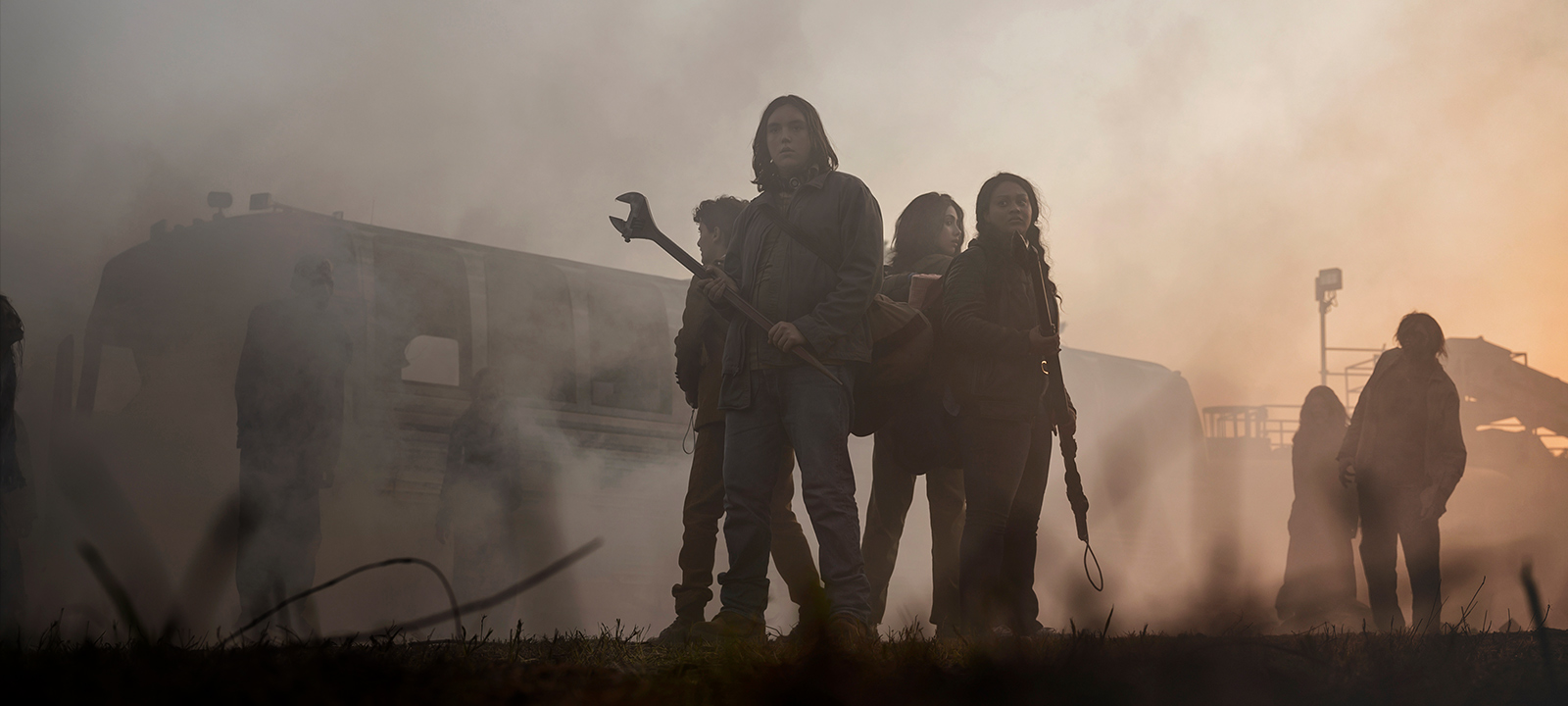
However, AMC has found the perfect idea: commissioning another show for the franchise. The air date announced in January, ‘The Walking Dead: World Beyond‘ premiering in April 2020 is already one of the most awaited TV series of 2020


A story about the first generation to come-of-age in the apocalypse should keep the public eyes fixed on the AMC screen long enough for the film to come out, which in turn should improve the audience ratings for the other series. 

Will this new TV series be enough to save the Zombie franchise? 

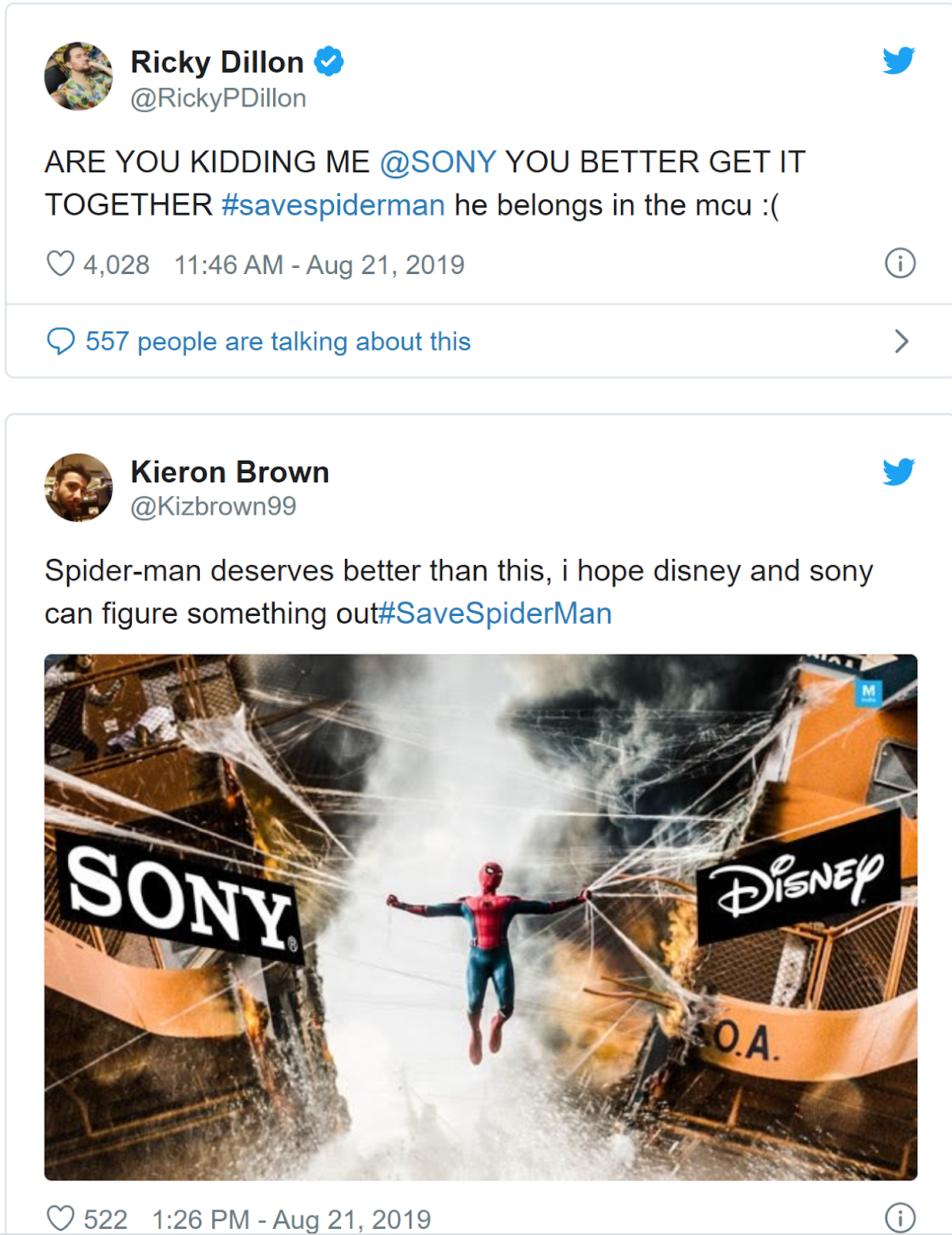
Sony’s Marvel Universe complications: Spider Man 3

Three days ago on the 28th February 2020, Marvel Production and Sony Pictures announced the air date for Spider-man 3 for 16th July 2020. However, the journey to get that film commissioned for the screen has been chaotic.


In 1998, bankrupt Marvel Studios proposed Sony to buy sold 900 comic-book characters for a total of 25 million USD. However, at the time Sony’s CEO, Yair Landeau did not care about any other character: “Nobody gives a shit about any of the other Marvel characters. Go back and do a deal for only Spider-man.”. So they went back and bought only Spider-man for barely 7 million USD with the deal that the studios produce a Spider-man film every five years.


Which it did with ‘Spider-man’ (2002, Sam Raimi), ‘Spider-man 2′ (2004, Sam Raimi), ‘Spider-man 3‘ (2007, Sam Raimi), ‘The Amazing Spider-man’ (2012, Marc Webb), and ‘The Amazing Spider-man 2‘ (2014, Marc Webb).


However, while it didn’t really bomb, The Amazing Spider-man 2 was the lowest grossing Spider-man film ever. Spider-man 3 with an audience score of 51% on Rotten tomatoes made 895 million dollars at the box office, while the Amazing Spider-man 2 with an audience score of 64% only made 709 US dollars.


In order to save a character they have a lot of hope for, Sony signed a contract with Marvel Studios in 2015 where Spider-man would be allowed to appear in the Marvel in the Cinematic Universe along every Marvel characters. In exchange, Sony would retain the distribution rights and Marvel gain 5% of the gross.


After that Tom Hollands’ Spider-man made several appearances in the MCU with ‘Captain America: Civil War‘ (2016, Russo’s Brothers), ‘Spider-Man: Homecoming‘ (2017, Jon Watts), ‘Avengers Infinity War‘ (2018, Russo’s Brothers), and ‘Avengers: Endgame‘ (2019, Russos’s Brothers). The audience couldn’t be happier with the collaboration, even ranking Tom Hollands’ Spider-man their 3rd favorite MCU character after Iron Man and Thor. It reached a peak when ‘Spider-Man: Far Form Home‘ (2019, Jon Watts) came out this summer and became the highest grossing Spider-man film, and Sony’s highest grossing film yet with 1 billion USD at the world-wide box office.


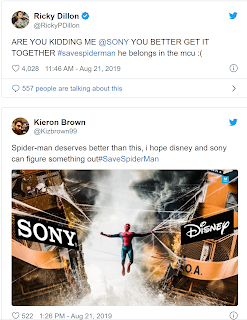
Under the success of the character, Marvel Production started thinking that their benefit share over the films was too slim when faced with the fact that it was their MCU that revived Spider-man. On the 20th August 2020, Kevin Feige announced that he pulled out of producing future Spider-man films. And the fans were not happy.


Facing the fans disapproval of Tom Holland’s Spider-man leaving the MCU, as a large part of his character was his relationship with genius billionaire Tony Stark, Sony and Marvel decided that they would lose too much in breaking their collaboration. Moreover, the president of Marvel Studios argued that the story-line with which the previous Spider-Man: Far From Home ended would benefit greatly if the character remained in the MCU.


Convinced, Sony Pictures made a new deal in September 2019 which would give Marvel 25% of the profits made by the next Marvel/ Sony Spider-Man film. On the 27th September 2019, Marvel announced that a Spider-Man 3 co-produced by Marvel Studios and Sony Pictures had been commissioned.

Will the increase in Marvel’s profits save the partnership, or give the studios more legitimacy over the character ending up in more tension in the future? 

DC and Marvel: a race for queer female super-heroes

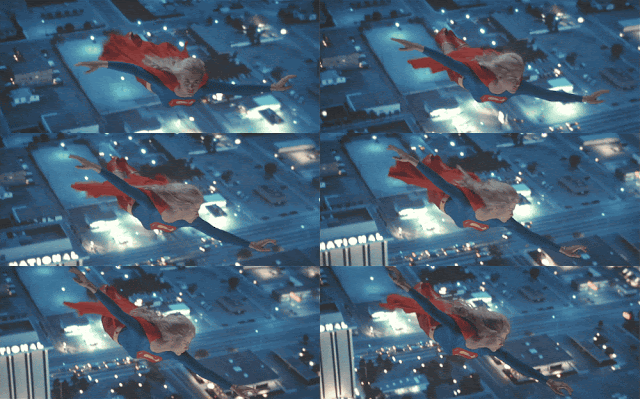
The first ever feature film to have a female super hero as a lead character was DC ‘Supergirl (1984, Jeannot Szwarc). However, it’s not the character everyone thinks of in terms of groundbreaking gender inclusion in superhero films. 

Since ‘Iron Man‘ (2008, Jon Favreau), Marvel have established themselves as the goal to beat in terms of comic-book adaptation, and they really lived up to their audience expectations by releasing their first female lead super hero film ‘Captain Marvel‘ (2019, Anna Boden and Ryan Fleck). More than that, Marvel had their first queer character with Valkyrie form ‘Thor: Ragnarok (2017, Taika Waititi), but Carol Denvers is the first queer female lead in a Marvel super-hero film. While it was a breakthrough and made almost eight times what it originally cost, Captain Marvel didn’t do so well in the public eye with only an audience score of only 48% on rotten tomatoes. 


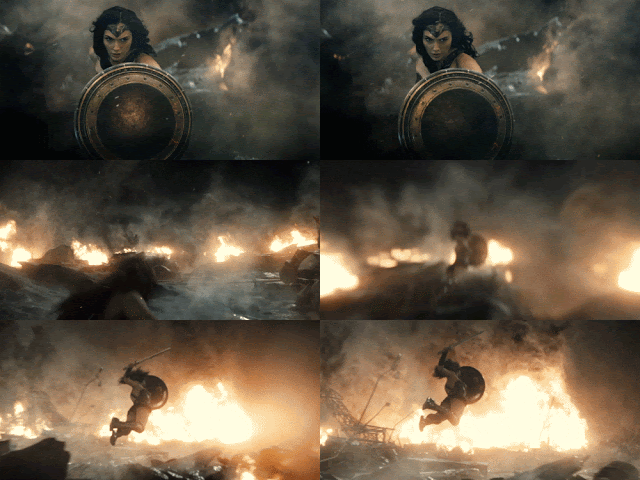
A year before Captain Marvel, DC Comics also produced their own female lead super-hero film ‘Wonder Woman‘ (2017, Patty Jenkins), which again made eight times what it cost in worldwide box office but did better with the public the Marvel heroine with an audience score of 87% on rotten tomatoes. Similarly to Carol Denvers, Princess Diana is a queer female super-hero, but the DC film came out earlier and, as such, the Amazon ended up being the first ever LGBTQ female lead character in a hollywood super-hero film. 


The rivalry between DC and Marvel is not new, and according to the audience, the Warner Bros. comic book publisher seem to be winning in terms of queer female representations in super-hero films. 


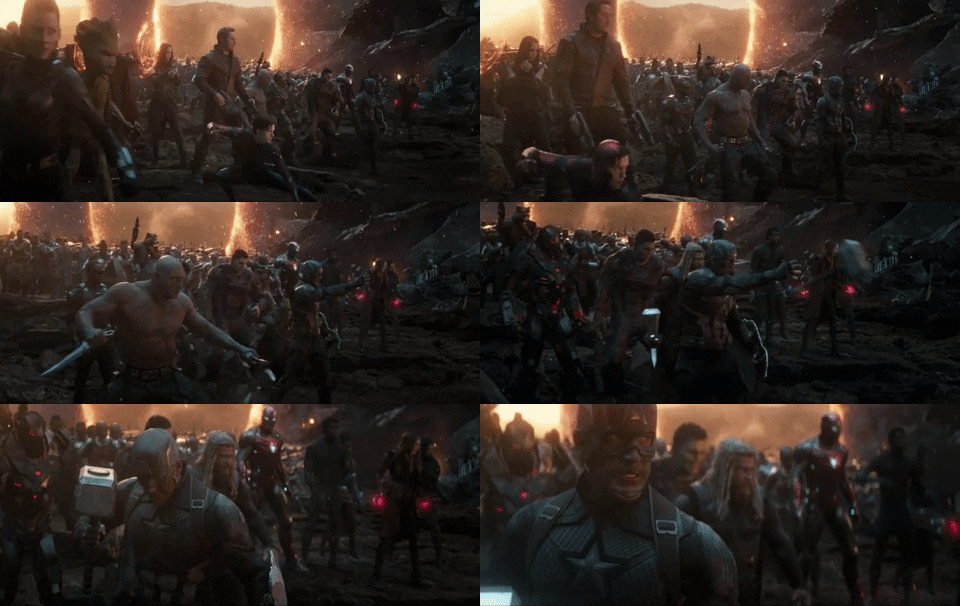
That’s not all. Beside Valkyrie in Thor: Ragnarok, Marvel has systematically failed to portray any female LGBTQ characters in their ensemble films. After a culmination of 22 films they released ‘Avengers: Endgame‘ (2019, Russo’s brothers) which ultimately was their last chance to give the audience a lead female queer character before the end of phase 3. Fans were outraged because all they got was 30 seconds scene of an unknown gay male character saying he lost his husband in the snap.


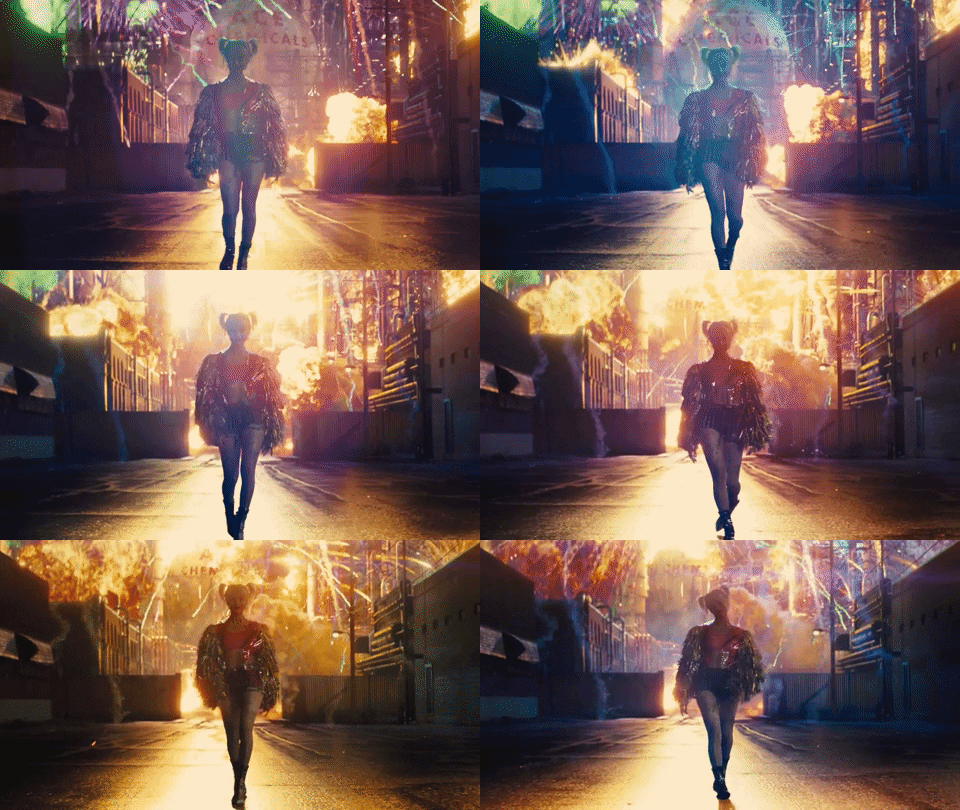
It was then DC’s turn to give their contribution to female LGBTQ representation in the super-hero universe with their first all female lead ensemble film: ‘Birds of Prey’ (2020, Cathy Yan). Beside, bisexual Harley Quinn, who had already appeared in ‘Suicide Squad (2016, David Ayer), the film also portrays a lead lesbian woman in the character of Renee Montoya

Birds of Prey was strategically released perfectly around Marvel fails to uphold audience expectations.

Is this how DC is going to establish their supremacy over Marvel? Should the Disney giant start feeling concerned for the future of their brand in a world that need characters ahead of their time? 

Disney live action fever

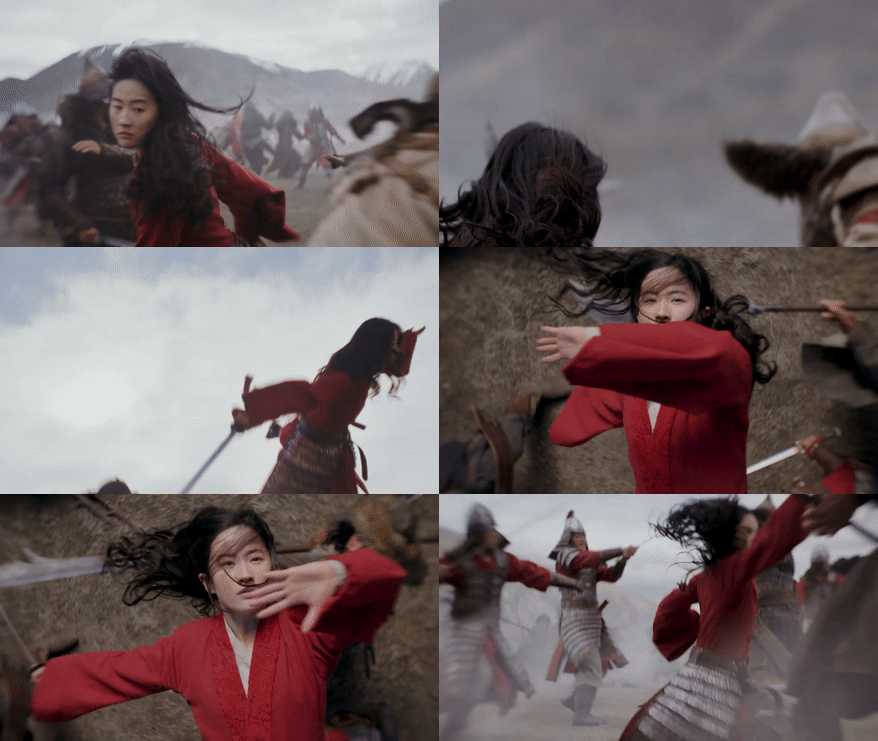
With the approaching release of ‘Mulan‘ on the 27 March 2020 by Disney, it seems relevant to take a look at the industrial reasons behind the company’s decision to commission live action remakes of their animated films. 


Since ‘Maleficent‘ (2014, Robert Stromberg), Disney started producing animated live action remakes every year, starting with ‘Cinderella‘ (2015, Kenneth Branagh), followed by ‘The Jungle book‘ (2016, John Favreau), ‘Beauty and the beast‘ (2017, Bill Condon), and ‘Christopher Robin‘ (2018, Marc Foster). Not an abnormal rate for the giant multinational mass media conglomerate. 

However in 2019 Disney broke their all time record by producing five live actions within the same year: ‘Dumbo‘ (2019, Tim Burton), ‘Aladdin‘ (2019, Guy Ritchie), ‘The Lion King‘ (2019, Jon Favreau), ‘Maleficent 2‘ (2019, Joachim Ronning), and ‘Lady and the Tramp‘ (2019, Charlie Bean).


Why this sudden peak in commissioning live action remakes? Well, it is all about copyright, ownership and nostalgia.


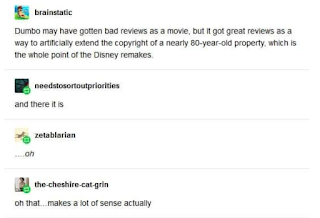
After Dumbo came out in March 2019, the audience felt like it was a way for Disney to extend their copyright over the story. While that’s not completely true because Disney never owned the copyright of the novels that their films originated from, according to copyright laws, it is not completely false either.


In 1976, the Sonny Bono Copyright Act was initiated, which extended the copyrights to a creative property from 50 years to 70 years for individual properties, or 95 years after publication for corporate work. In that aspect, every book published before 1950, are now part of the public domain and everyone can make movie and TV series adaptations from them. 


As an example, the original ‘Treasure Island‘ novel by Robert Louis Stevenson went into public domain in 1944, 50 years after the publication of the novel according to the copyright laws prior to the 1976 Copyright Act. Disney releasing ‘Treasure Island‘ (1950, Byron Haskin) in 1950, a few years only after the copyrights of the film went into public domain, does not mean that they own the story. Indeed, a dozen other companies also produced version of Treasure Island such as ‘Treasure Island‘ (1990, Fraser Clarke Heston) Turner Pictures. 


Why then keep making films about a story that anyone can copy or mimic? 


While all film adaptations are based on the same source material, the production company that produces them own the familiar elements of the representation such as the songs, the set, or the costumes. An example is ‘The Wizard of Oz‘ (1938, Victor Fleming) where Warner Bros. owns the Red Ruby Slippers and the Yellow Brick Road which make the film iconic, and that now no on can mimic because they own it for 95 years after the film release according to Sonny Bono Copyright Act.


Then it’s just a matter of reminding the public who is doing it better than the others. 


When ‘Mowgli: Legend of the Jungle‘ (2018, Andy Serkis) was produced by Warner Bros., Disney immediately commissioned a sequel to their Jungle Book suppose to come out in October 2020. Or when a Chinese version of Mulan, ‘Mulan: Rise of a Warrior‘ (2006, Jingle Ma) came out, Disney commissioned their own Mulan live action film. Finally with Netflix producing ‘The Little Mermaid‘ (2018, Blake Harris) to which Disney responded by commissioning a Little Mermaid live action to be directed by Robb Marshall. 

Disney is commissioning so many live actions remakes because it needs to assert its ownership onto stories they have used as trademarks for their brand, and they need to do that before anyone else does. 

However, is this emergency not too rushed for the audience to make sense of it and be beneficial?

Hollywood reboots ethnic diversity

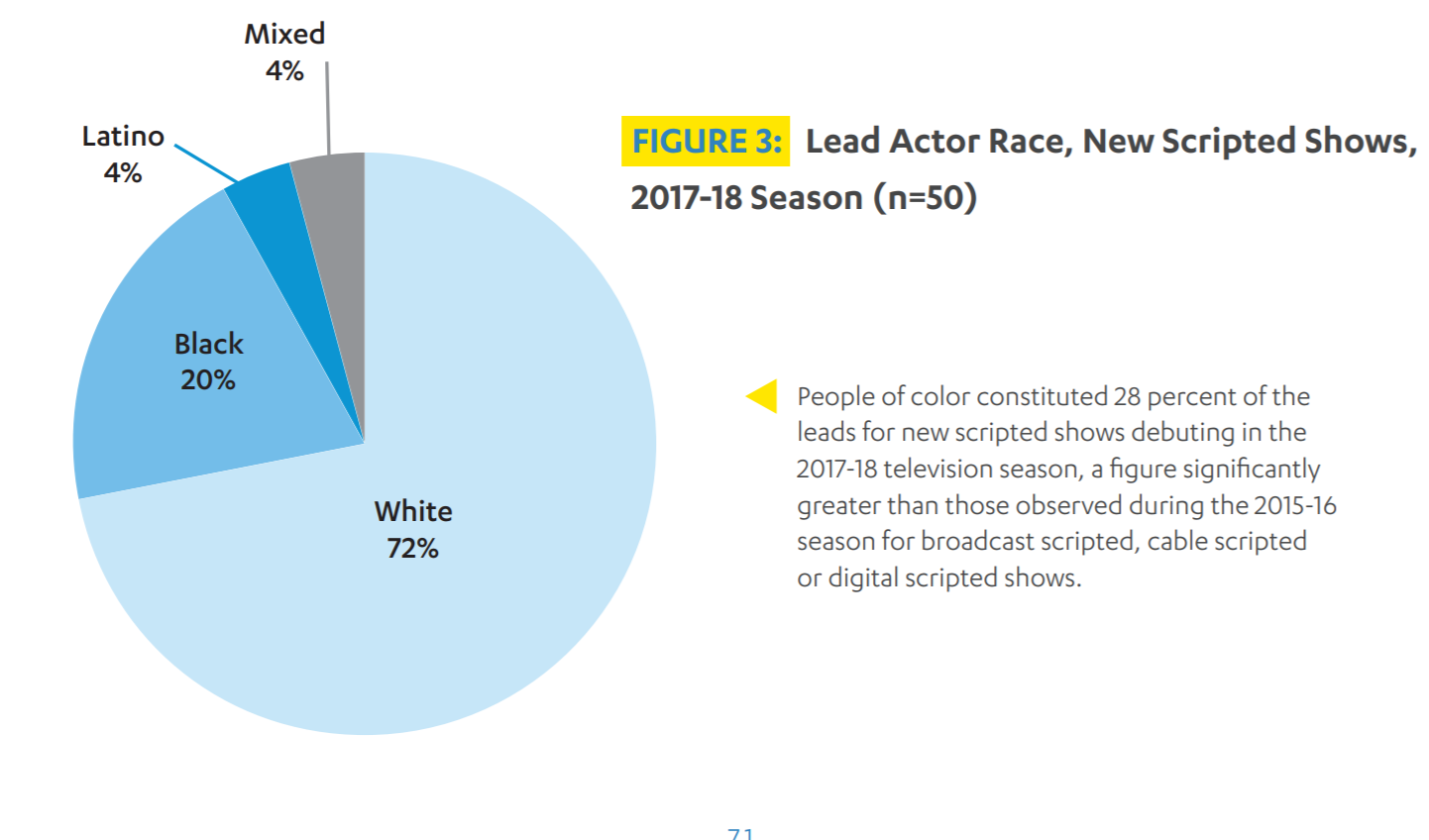
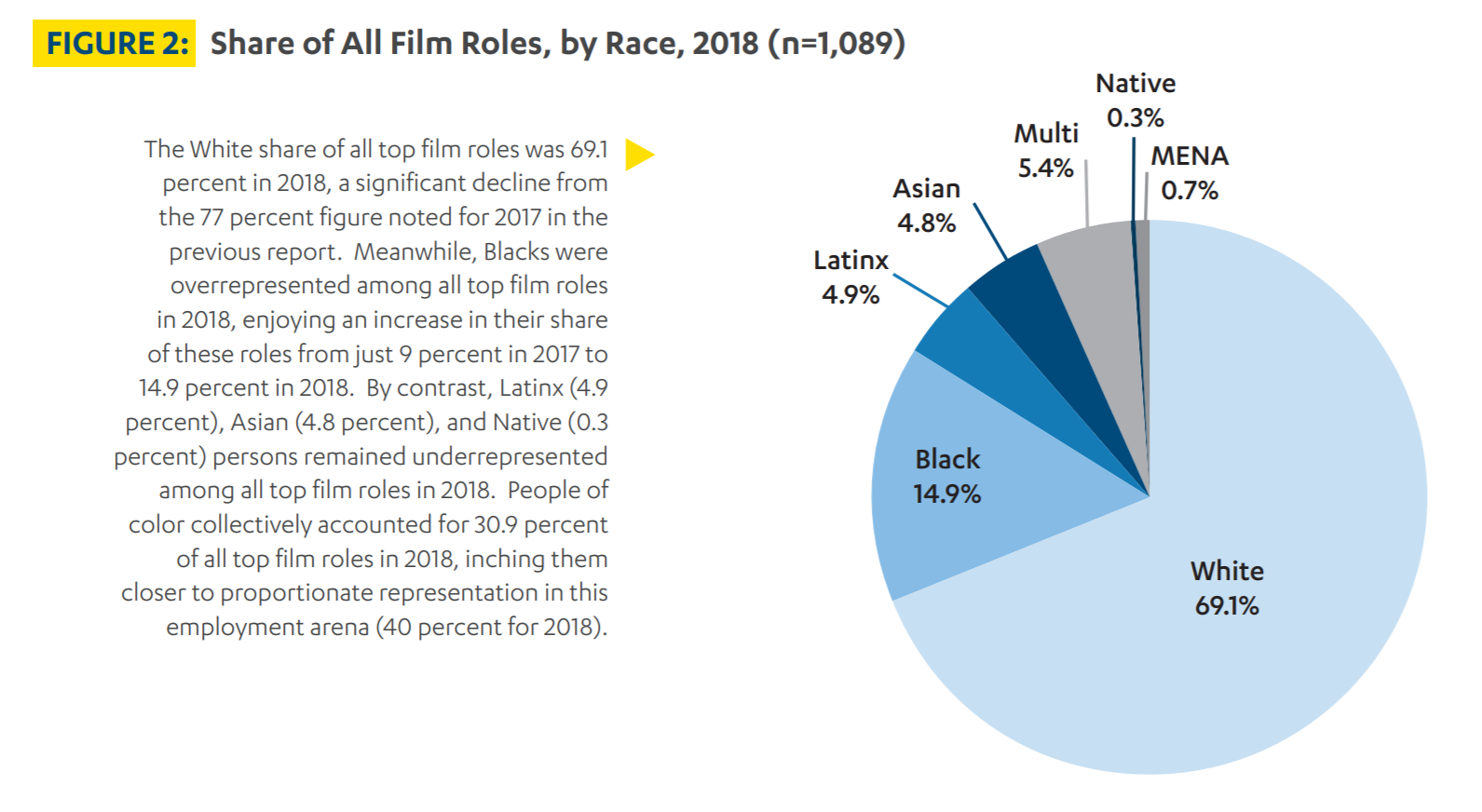
Cast ethnic diversity has a always been at the center of conversations in the Hollywood cinema industry. According to the Hollywood Diversity Report, there has been a slight improvement throughout the years. 

However, these numbers are still very much unequal when compared to the United States demographic. Currently the USA is 60.4% white when the Hollywood films’ cast diversity gravitates around 67% in 2019. 


In desperate need for ethnic diversity, Hollywood tried to find a solution in a decade that was groundbreaking in terms of cast diversity in TV series/ sitcoms: the 90’s. According to a National Public Radio article, this decade counted 17 shows that portrayed a black family, and according to a Complex list of the 30 best black sitcoms of all time 16 were running in the 90’s, such as ‘Martin‘ (1992-197, Fox) and ‘The Fresh Prince of Bel-Air’ (1990-1996, NBC). 


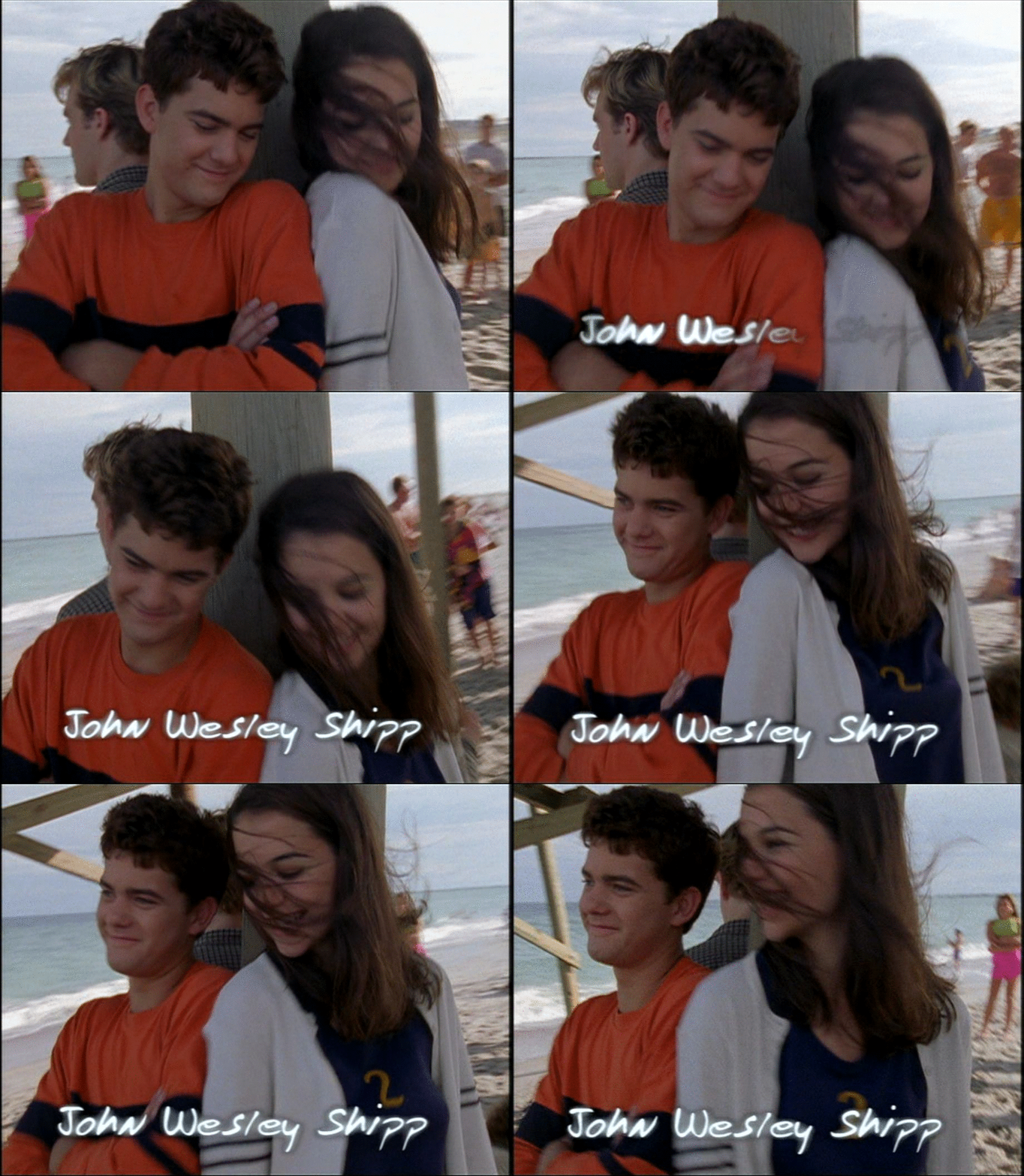
However, while the 90’s were considerably ahead of its time, some of the TV series back then were critically lacking in casting diversity. Another Complex article about the 25 whitest shows of all time counts 17 shows made in the 90’s including ‘Dawson’s creek’ (1998-2003, Kevin Williamson), ‘Friends’ (1994-2013, NBC), or ‘Freaks and Geeks’ (1999-2000, Paul Feig).


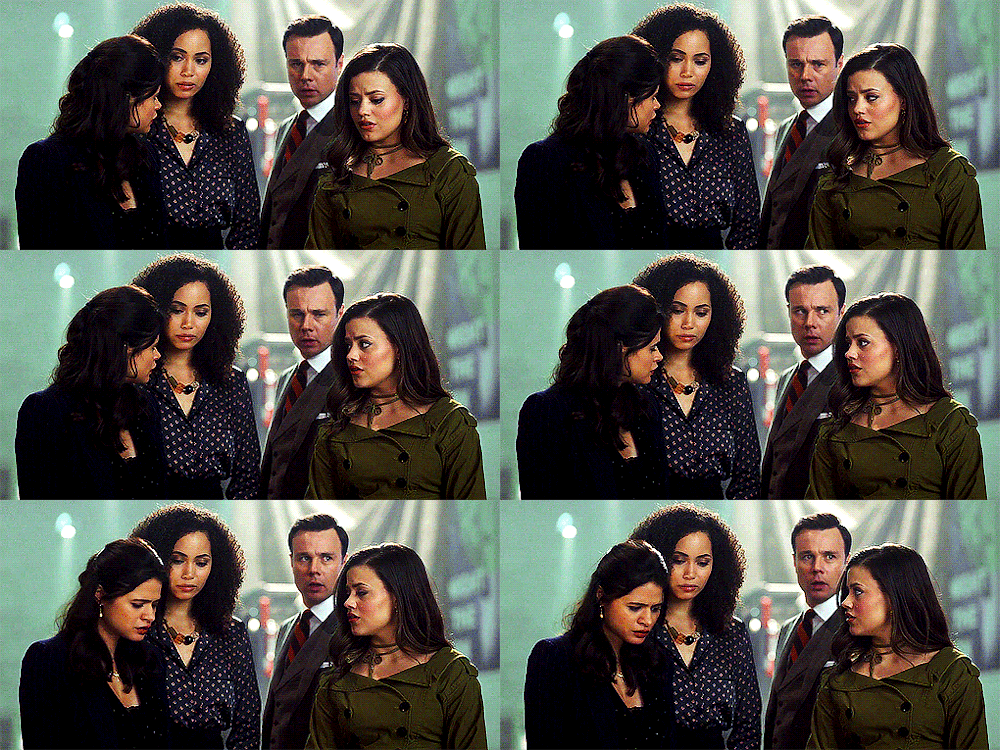
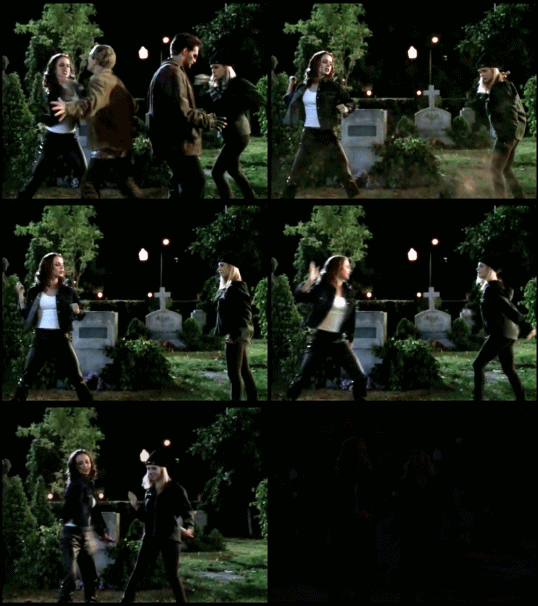
The first one to grab the opportunity was the CW who released their pilot episode for a ‘Charmed’ (2018, The CW) reboot on the 14th of October 2018, casting Madeleine Mantock, Melonie Diaz and Sarah Jefferey as the 21st century sister Halliwell’s. Picking some of the TV series considered as the best of the 90’s by IMDb and rebooting them with drastically different casting firstly gives the appeal of nostalgia to audiences that grew up with these shows in the 90’s and can now enjoy them again over 20 years later. It also proves that Hollywood is ready to admit their mistakes and work to improve on screen diversity. It seems to work as the Charmed reboot scores a 71% on rotten tomatoes and got a season two that aired on the 7th February 2020. 

Following in the CW footsteps, 21st century fox announced in July 2018 a reboot of ‘Buffy the Vampire Slayer’ (1997-2003, Joss Whedon) supposed to air on Disney + since the production company was bought by Disney on the 20th march 2019. The main selling point for the show was that it is meant to be “richly diverse” said Century Fox, including the female lead supposedly being cast with a black actress. 

The question is: shouldn’t Hollywood create new stories with rich diversity rather than try to fix mistakes of the past? 

The cult Wachowski Sci-Fi franchise is back: Matrix 4

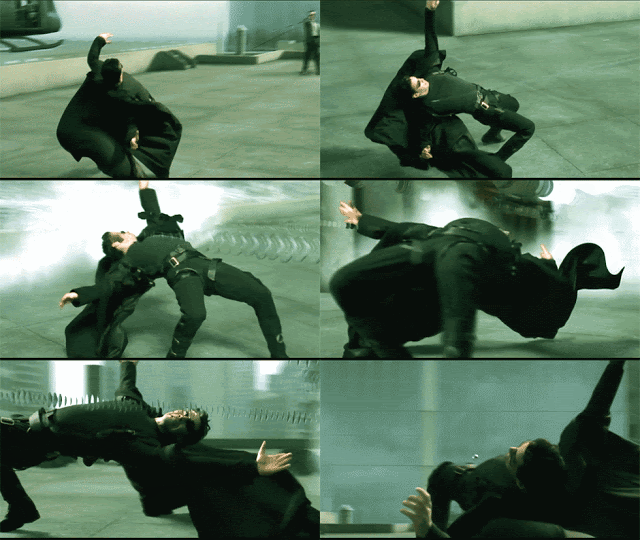
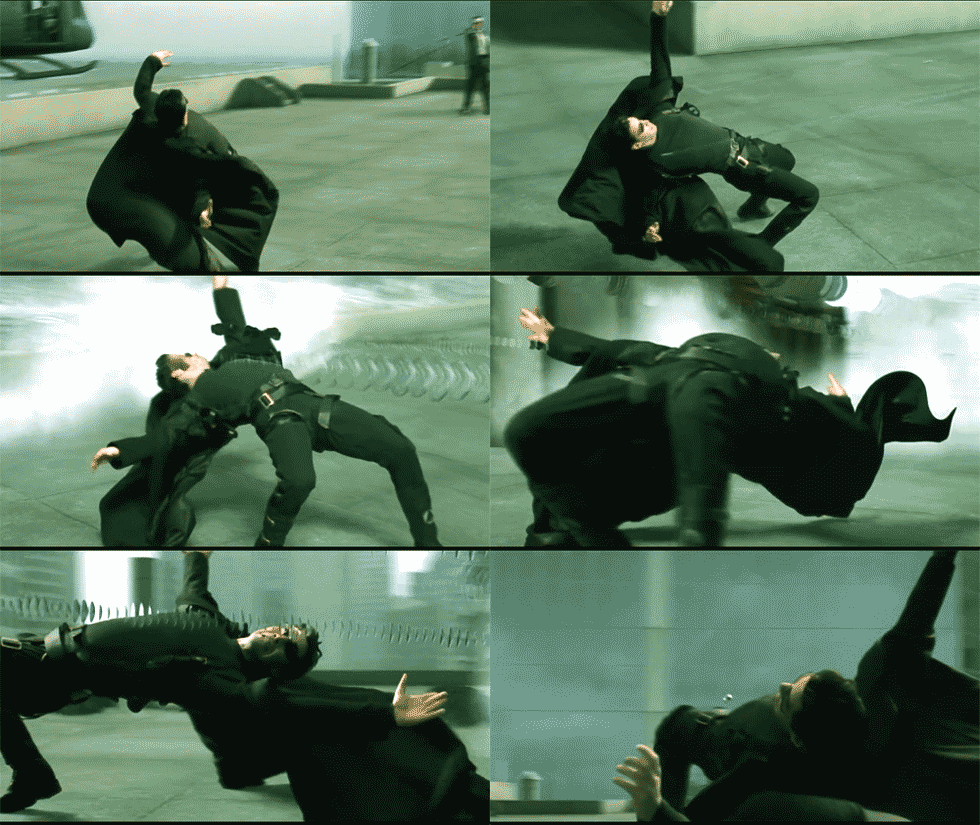
Starting with ‘Metropolis’ (Fritz Lang, 1927), passing by ‘2001: Space Odyssey‘ (Stanley Kubrick, 1968) and the legendary ‘Star Wars‘ (George Lucas, 1977), the 20th century has established the science-fiction genre as a giant within the cinema industry. Now considered as one of the best cyberpunk movies ever madeThe Matrix‘ (Wachowskis, 1999) finished the era with a bang by showcasing filmmaking technologies never seen before. Indeed, inventor John Gaeta used the dystopian trilogy to develop his photography techniques, including Bullet Time Effect, Volumetric Filmmaking, and Universal capture, which foreshadowed Virtual Reality, Mixed Reality, and Holo Cinema.


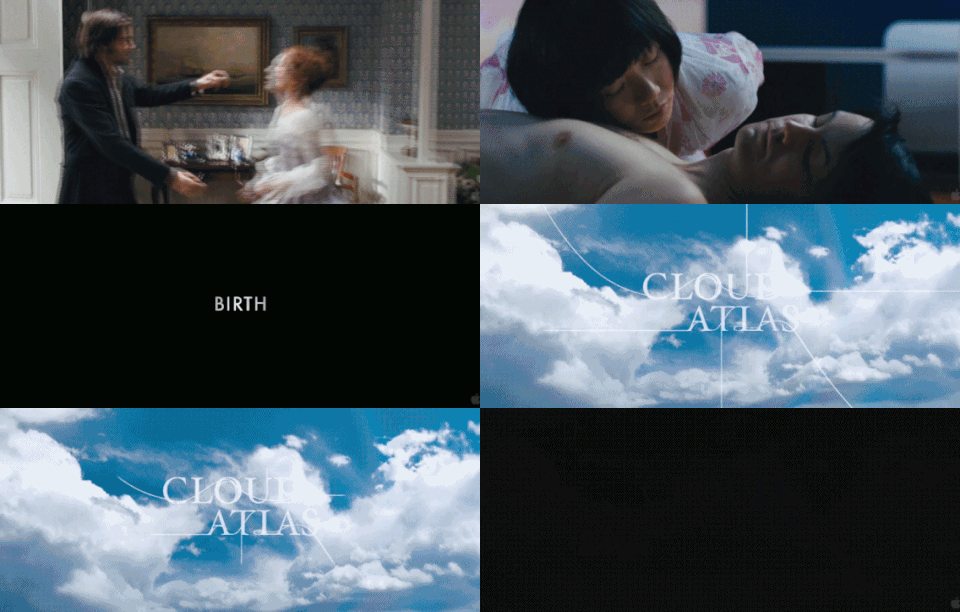
Ahead of their time, The Wachowskis were then pro-pulsed at the front of the 21st century Hollywood sci-fi stage. However their many attempts to conquer the public without Matrix fell short. 9 years after the ‘The Matrix Revolutions‘ (2003) came out, they directed and produced the epic novel adaptation ‘Cloud Atlas’ (2012) alongside Tom Tykwer. Unfortunately, the film with a budget of 128.5 million USD barely made back what it cost by grossing only 130.5 million USD worldwide


Three years later, they wrote, produced and directed a space opera staring Mila Kunis and Channing Tatum; ‘Jupiter Ascending‘ (2015). The film did not do well either with at least 15 million USD lose and an audience score of 38% on Rotten TomatoesLana Wachowski explained the fans disappointment about the film: “When I was young, originality was everything. A sequel was like a bad word. We’ve gone to the opposite place where [audiences] actually are more exited about a story we know the ending of.”. The sisters seemed to have troubles making their way in a post-Avatar (James Cameron, 2009) era where it is very difficult for a movie-maker to impress a blasé audience with audacious VFX. 

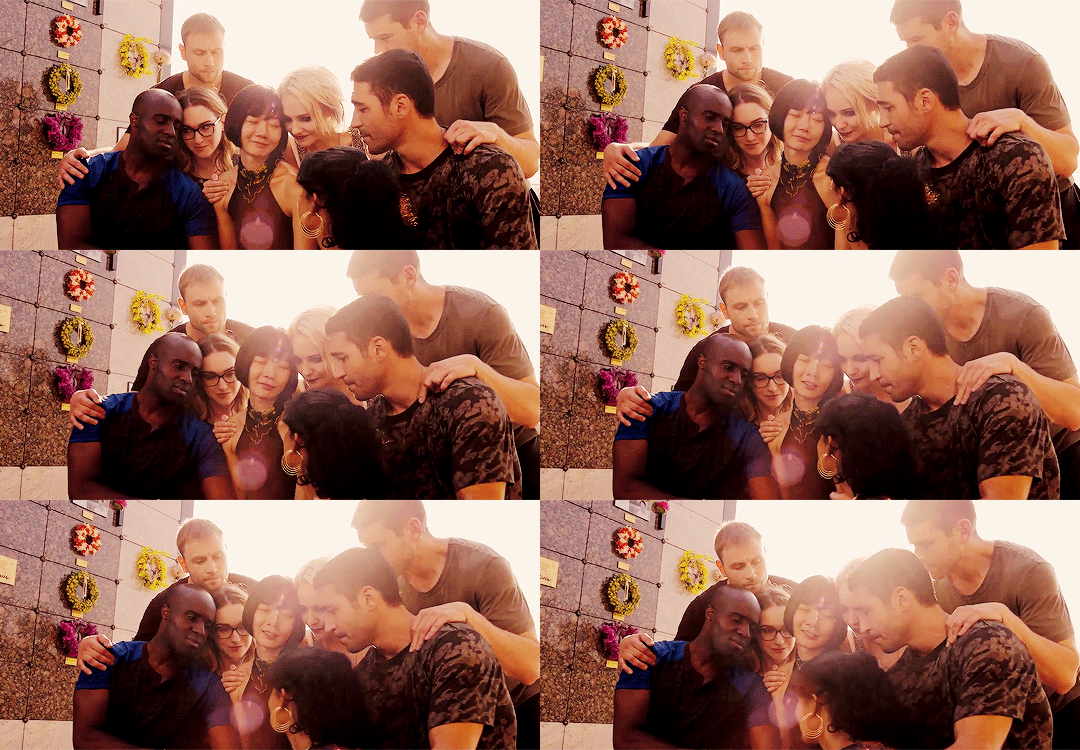
However, on the 5th June 2015, the first episode of their new TV series ‘Sense 8’ came out and that changed everything. The science fiction drama web television available on Netflix was a wide success considered by imDb as the 5th best sci-fi series ever made and a record audience rotten tomatoes score of 91%. Unfortunately, the show putting around 9million USD per episode, cost Netflix too much for the audience it brought in exchange. Indeed, Cindy Holland, Netflix Vice president said: “At some point if you don’t have the viewership showing up to justify the expense of the series, you’re going to want to end it.”. 

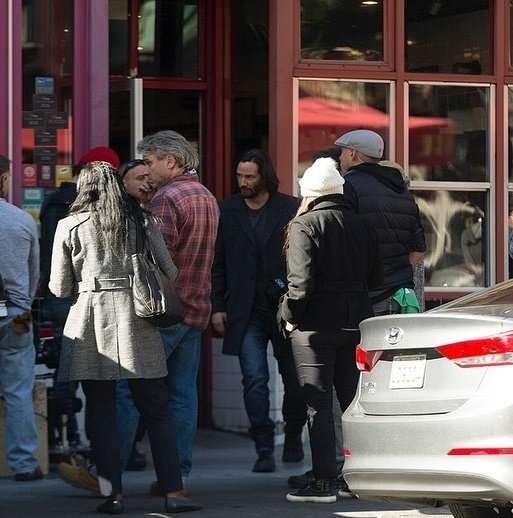
While Lily Wachowski has taken a break from the cinema industry since 2016, Lana did not find any project to bounce of off since Sense 8 got cancelled in 2018. That is when the miracle happened on August 20, 2019: Lana announced The Matrix 4. After two decades of struggle in the Hollywood sci-fi universe, The Wachowskis decided that the best strategy to come back to the front of the stage was to go with their strongest creation. In order to make that work, Keanu Reeves and Carrie-Anne Moss have also confirmed to be casted again as Neo and Trinity. And it might just be a success as after ‘John Wick 3‘ (Chad Stahelski, 2019), Keanu Reeves has experienced a boom in his popularity among non – matrix fans, Marvel have proposed him a part in every film they are producing at the moment, which might which could possibly bring enough audience for the sequel.

However, is the public nostalgic enough to go see a sequel that took almost 17 years to come out? 

Game of Throne Legacy: Netflix and The Witcher

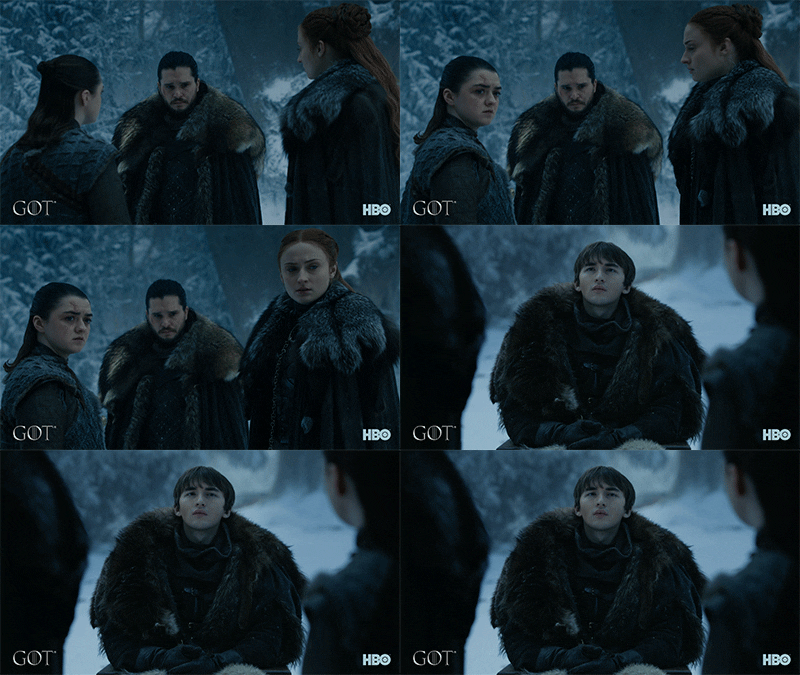
The last ‘Game of Thrones’ (2011-2019, David Benioff, D.B Weiss) episode came out in May 19, 2019 and the TV show universe is in mourning. 


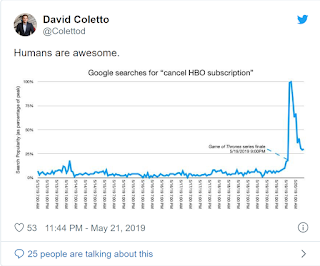
As the season ended, a lot of HBO viewers threatened to cancel there subscription to the streaming platform

It was not actually that bad as HBO only experience a revenue loss of 16% in the post-finale time-span. That is probably due to their strategic launch of the long awaited fantasy drama ‘His Dark Materials‘ (2019, Jack Thorne) that premiered on the platform on November 3rd, only few month after the end of Game of thrones.  

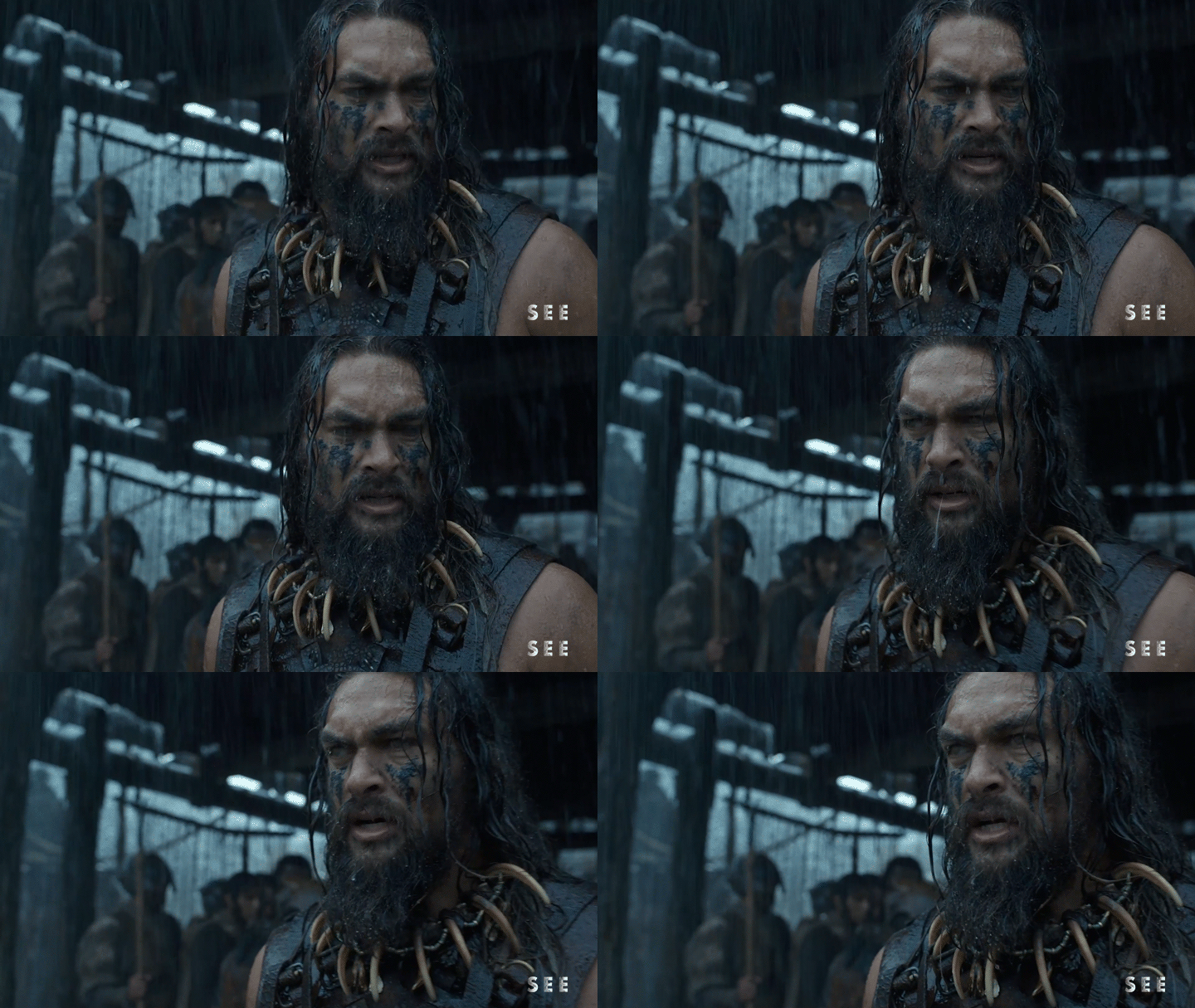
However, His Dark Materials was not the only fantasy/ Science-fiction show to try and steal the spotlight left by GoT. Around the same time on November 1st, Apple TV finally launched their own streaming services with original Sci-Fi web series casting Jason Momoa as lead; ‘SEE‘ (2019, Steven Knight). 

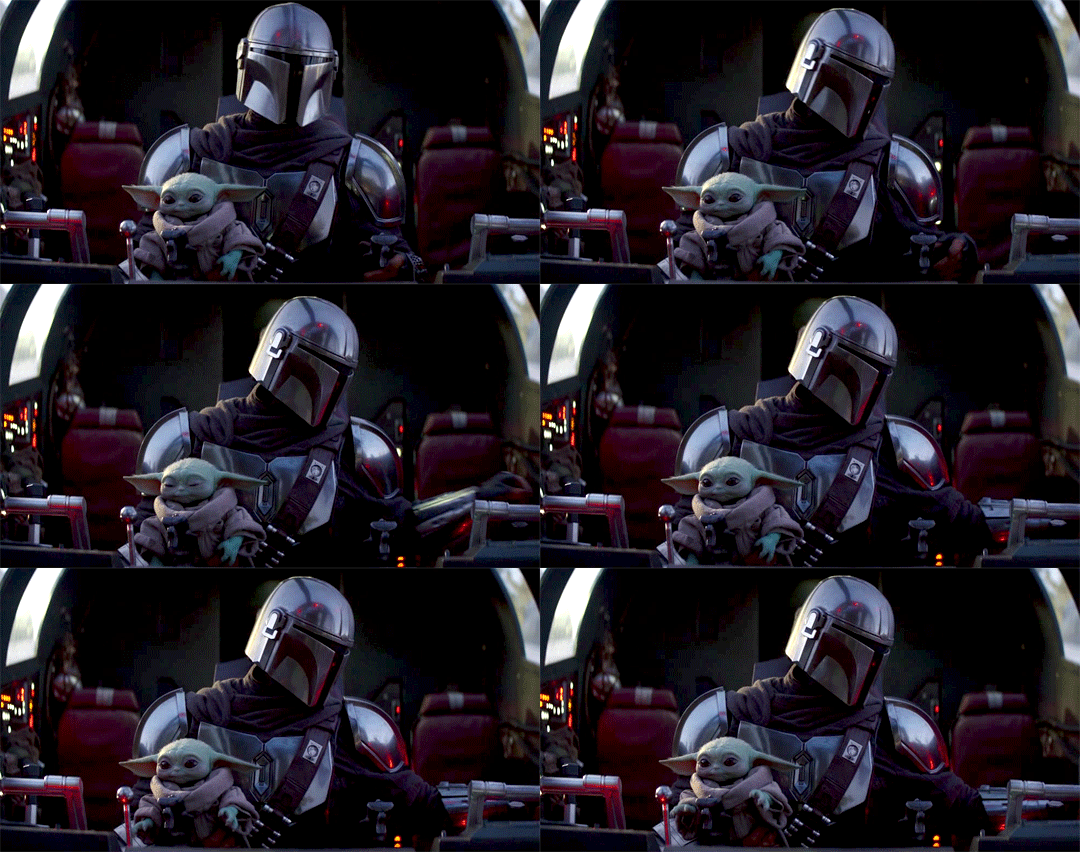
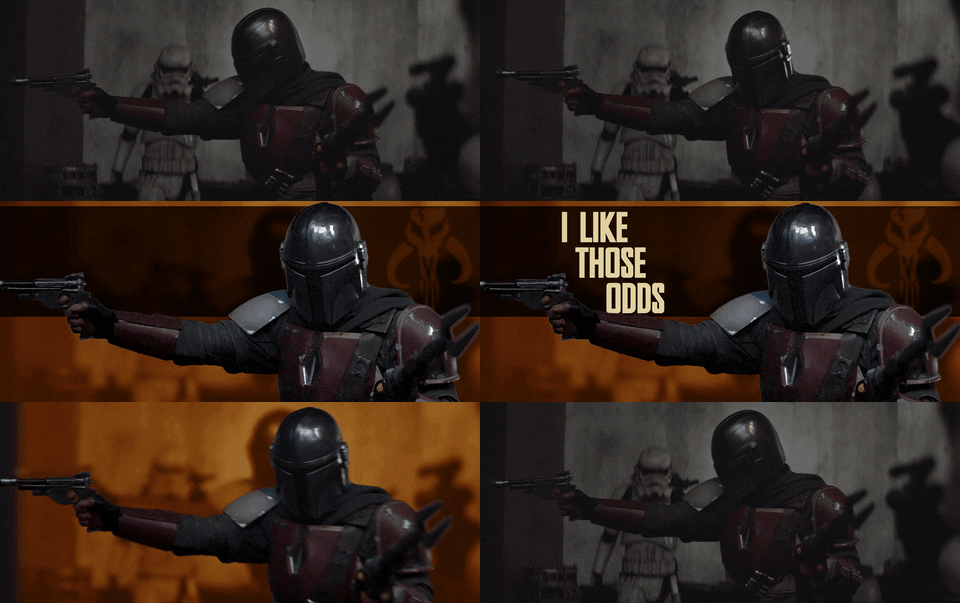
A few days after on November 12, Disney arrived as a giant in the online streaming industry launching alongside Disney + their first Star Wars series ‘The Mandalorian‘ (2019, Jon Favreau). At the start of December, the series dethroned ‘Stranger Things‘ as the  most in demand show in the world with 31.9 times more in-demand than any other title according to Parrot Analytics and their analyze of streaming, peer-to-peer protocols, social media engagement, blogging, photo sharing, and research engines. Game of Thrones seemed like they found their successor. 

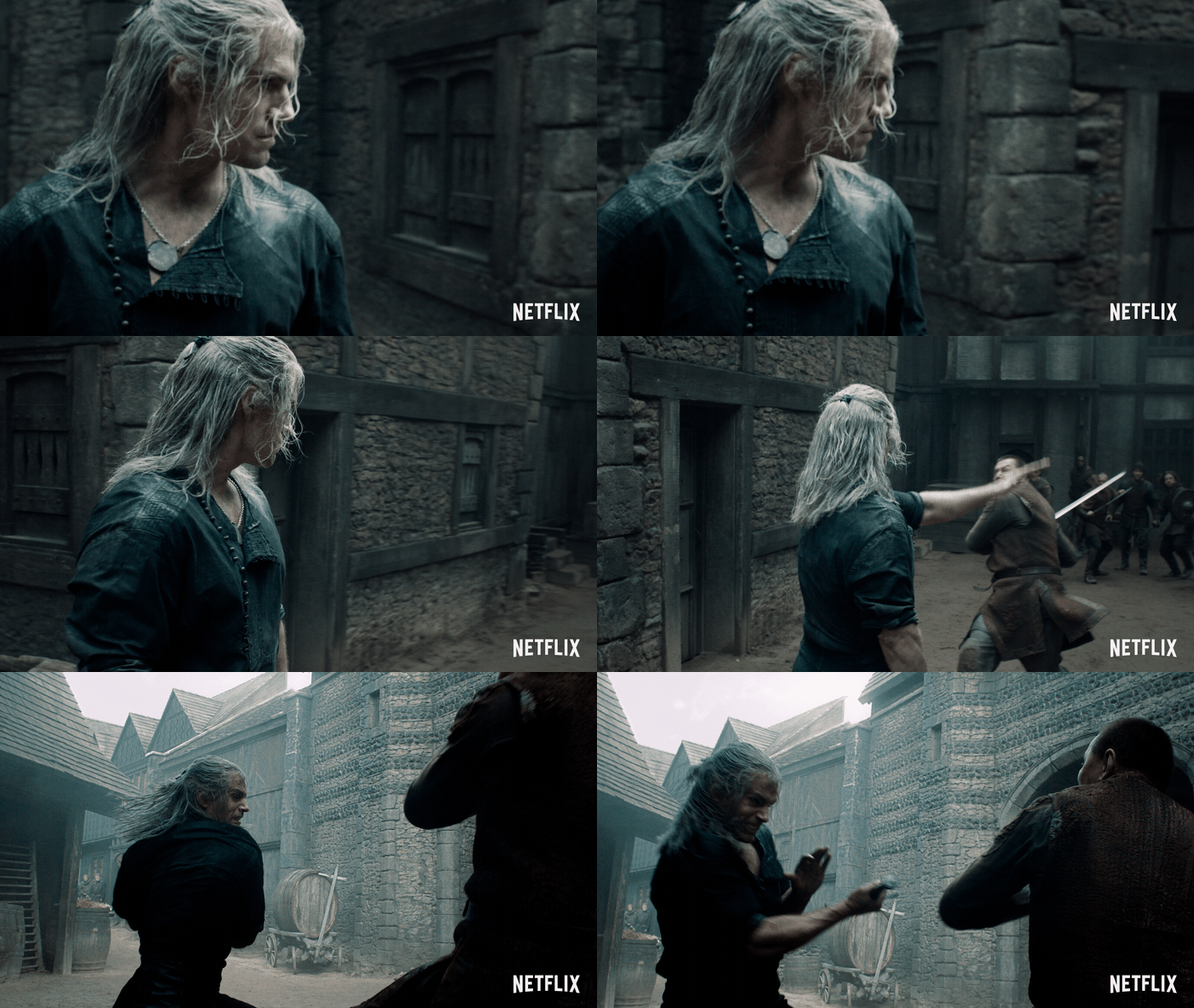
That was all before Netflix and ‘The Witcher’ (2019, Lauren Schmidt Hissrich). After the ‘Chilling Adventures of Sabrina‘ (2018, Roberto Aguirre Sacasa) and ‘Umbrella Academy‘ (2019, Steve Blackman), the giant American media-services provider produced yet another fantasy drama series that aired on the platform on December 20th. Already the most watched TV series on Netflix, Henry Cavill was fast to dethrone Pedro Pascal at the top of the TV food-chain. Between the 22nd and the 28th December, the monster hunter generated nearly 127 million demand expressions while baby Yoda produced 115 million demand. People are already cancelling their subscription to Disney +, making The Witcher the new prime fantasy show

Moreover, Kristofer Hijvu, playing Tormund Giantsban in Game of Throne just got confirmed to play a character named Nigel in the season 2 of The Witcher, making it also the legitimate Game of Throne successor.

Netflix is worrying though, is the hype going to last? 

Why ‘The Mandalorian’?

Looking at the highest grossing movie franchises of all time , Disney largely dominates the top ten with their Marvel Cinematic Universe which, thanks to ‘Captain Marvel’ (2019, Anna Boden, Ryan Fleck), ‘Spider-man: Far From Home’ (2019, Jon Watts), and ‘Avengers: Endgame’ (2019, Russo’s Brothers), grossed worldwide around 5 billion dollars in 2019.

Following closely on the list, comes the 40 years old movie franchise also owned by Disney: Star Wars. However, while the MCU made almost 18 billion dollars total since its first film came out, the space franchise only made half of that.

While it can be argued that this is a result of Marvel having a bigger fanbase than Star Wars, there is a much simpler explanation. Marvel has produced eleven live action TV shows since ‘Agent of S.H.I.E.L.D‘ (2013-, Joss Whedon, Jed Whedon, Maurissa Tancharoen) in 2013, while Star Wars has had none besides animation.


In the age of video on demand, this lack of visibility on TV platforms has cut the franchise from reaching an audience uninitiated to Star Wars that wouldn’t pay for a cinema ticket but might watch the series if it was available with a subscription to a streaming service, like Marvel Iron Fist or Daredevil are on Netflix.


At least that was until one month ago, when Disney + was launched on November 12, alongside Netflix, Amazon, Hulu, HBO Now and all the other streaming platforms that preceded it, but cheaper. Disney arriving on the public’s phones and laptops was undeniably the biggest thing happening in the TV industry in 2019, and the fans were beyond exited about it happening.

However, Disney needed this launch tool that was going to automatically attract the streaming audience to their platform. This was going to be the first Star Wars live action series ‘The Mandalorian‘ (2019, Jon Favreau), situated chronologically between the first trilogy and the last one. The fans didn’t have a choice but to go buy their licence to Disney + to see the space franchise from a new angle, different than the usual fight between the Sith and the Rebellion storyline, and its surprising format of 30 minute long standalone episodes.

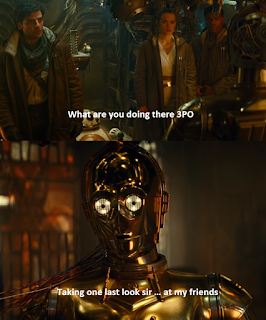
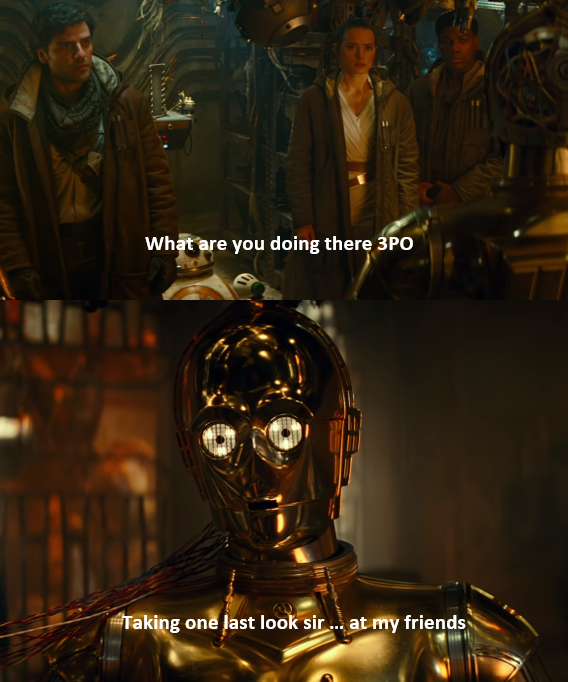
Moreover, The Mandalorian also had to come out at the time it did because it revived the audience’s interest in the Star Wars franchise few weeks before the premiere of the ninth chapter, ‘The Rise of Skywalker’ (2019, JJ Abrams). 

Disney actually took their time to release the trailer for The Rise of Skywalker, compared to previous films of the franchise where the trailers all came out in the September preceding their premiere in December. 

When it finally released in November, it perfectly coincided with the launch of Disney + with The Mandalorian as main attraction of the streaming platform. 

This can be understood by the fact that the main marketing tool used by Disney in this trailer was that the Chapter 9 of the franchise would be the last of the saga: “The saga will end… but the story will live forever.” 

In this aspect, The Mandalorian was message to fans saying they could be reassured;’the story will live forever’ on your TV screens at home.

Considering its niche audience, was Star Wars the right way for Disney to go to launch their streaming service ?

Design a site like this with WordPress.com
Get started